Fundamentals of Digital Marketing: A Complete Guide
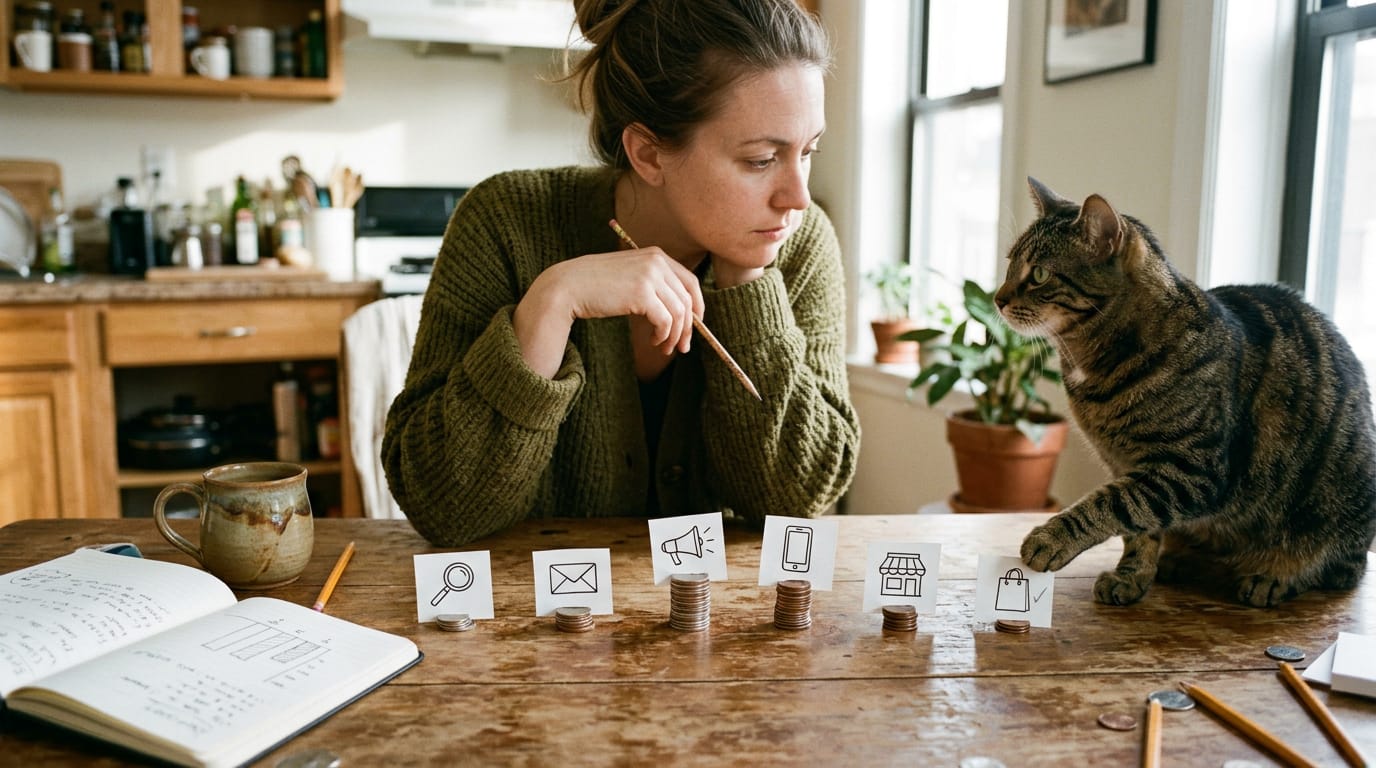
Fundamentals of digital marketing help people find, trust, and choose you. Build a simple channel mix and routine, then measure what works.
Monday9–5

Tuesday9–5

Wednesday9–5

Creative SoftwareAdobe Creative Cloud alternatives for a one-person studio
Thursday9–5

Pricing & MoneyHow to ask a client for payment when an invoice is late
FridayClosed to clients
The paperwork is done.FreelancingHow to plan paid time off as a freelancer
See the kitArticles on pricing, clients, software and marketing for freelance designers, illustrators, photographers and writers who work alone on purpose, and The Studio Kit: a proposal, contract, invoice and day-rate calculator, ready to use.
From the notes
Your day rate is what the studio has to bring in over a year, divided by the days you can actually bill.
From How to calculate your freelance day rate, step by step, by Corinne Halvorsen
(Take-home pay + studio costs + tax) ÷ billable days = day rate
| Line | How it’s worked out | Example |
|---|---|---|
| Income to take home | What you want to keep after tax | $63,000 |
| Studio costs | A year of overheads | $12,000 |
| Tax | 30% of profit, set aside | $27,000 |
| What the studio must bring in | The three added together | $102,000 |
| Days you can bill | 260 weekdays, less time off and admin | 179 |
| Day rate | $102,000 ÷ 179, rounded up | $570 |
$570a day
Round up, never down, because rounding down takes the difference out of your take-home pay.
The day-rate calculator in The Studio Kit runs the same sum with your own numbers.
The calculatorThe Studio Kit
Six documents that take a project from the first call to the final invoice, in Notion, Google Docs and PDF, and a calculator that sets your day rate from the income and the time off you want.
Day-rate calculator
Creative brief
Proposal
Contract with plain-English notes
Onboarding questionnaire
Change-request form
Invoice
One question per piece, answered with the numbers in it: the rate, the deposit, the payment terms, the price of a single seat.
Fundamentals of digital marketing help people find, trust, and choose you. Build a simple channel mix and routine, then measure what works.
Social proof in marketing turns customer trust into a reason to choose you. See how to gather, place, and measure proof honestly, even with few customers.
How to write a case study: turn one project into a clear story, choose its audience and length, and follow the steps from interview to publish.
Marketing attribution models show how each model scores the same client journey, helping you choose a fit for your studio without an analytics team.
Marketing strategy definition: see how goals, audience, and route shape your plan, then build repeatable steps and measure what works for growth.
Start where the business is costing you most: what you charge, who you work for, or the hours that go on admin.
Going freelance and staying freelance: the decisions, structures and habits of working for yourself, for creatives leaving a job or years into it.
What to charge and how to get paid: rates, quotes, invoices, taxes and an irregular income, for creatives who send their own invoices.
Finding the right clients and working with them, from the first inquiry to the final file, for studios that want fewer, better clients.
The software a creative studio works in, compared for a single seat and a small budget, for designers, illustrators, photographers and writers.
How a studio presents itself: its name, identity, website and the case studies that win the next client, for creatives selling their own work.
Getting found by the right clients without becoming a full-time marketer: email, social, search and referrals for a studio of one.
The room, the hardware and the apps that keep a one-person studio running, from the desk and the screen to backups and time tracking.
A tool earns a place here by charging fairly for a single seat, never forcing a team plan, and every group has a free or cheap pick.
See the tools