Marketing Funnel Explained: Stages, Models, and Metrics
Marketing funnel maps how strangers become customers, from first glance to contract. See key stages, metrics, and a path from enquiry to repeat business.

Contents
A marketing funnel is a map of the steps people take from first discovering a business to becoming paying, returning customers. It helps you match useful messages to each stage, spot where prospects drop off, and improve the path with simple measures such as enquiries and bookings. In practice, start with a clear portfolio, an easy way to enquire, and timely follow-up, then refine what works and keep past clients engaged.
Think about the last time a stranger’s portfolio made you curious enough to hire them. Somewhere between that first glance and the signed contract, you made a few small decisions, most of them invisible to the creator.
A marketing funnel maps that path on purpose: the stages a stranger travels to become a paying client, with people dropping out at each step.
We’ll cover each stage, the main models behind the idea, the metrics that show what’s working, and whether the funnel still holds up. Then we’ll build a lightweight version for a studio of one, from portfolio to enquiry to repeat client.
What a Marketing Funnel Does for You
A marketing funnel maps how strangers become paying clients and where they drop away. For a studio of one, that’s the difference between hope and a plan.
Picturing the customer journey as a funnel
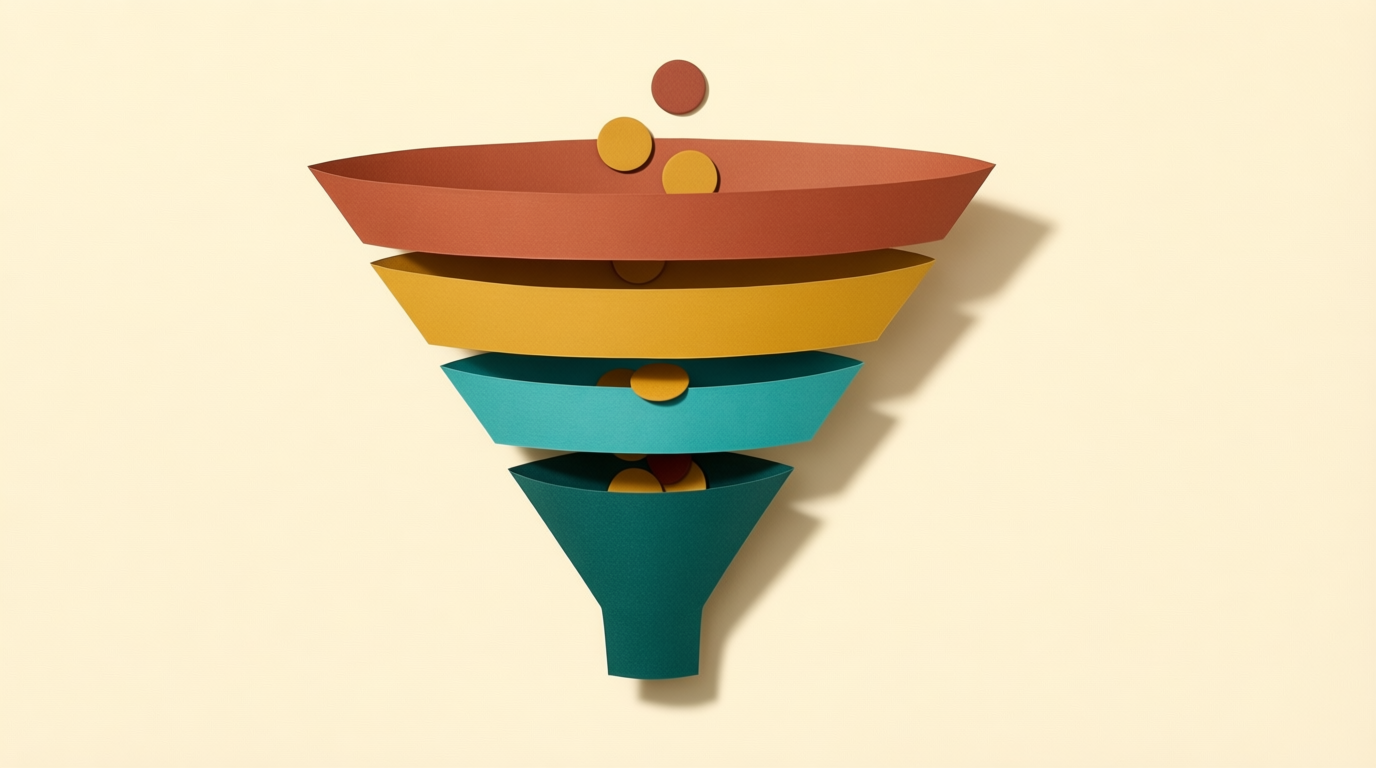
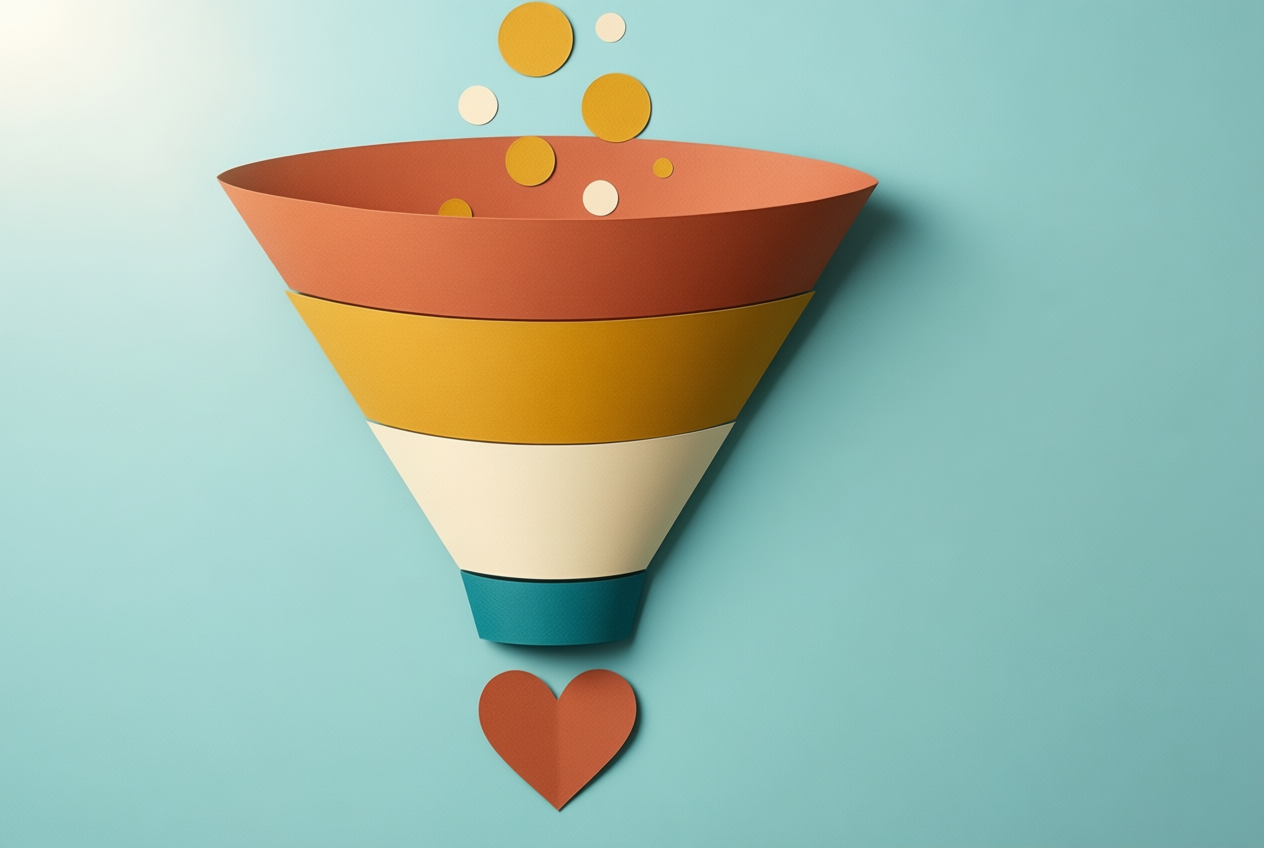
Think of the funnel as a customer journey map: a visual record of every step from first glance to hire. It’s wide at the top and narrows as prospects move through each stage, since not everyone is ready to book.
The journey runs from first notice to signed contract, and beyond. The goal is less about catching everyone and more about moving the right people along.
Why a funnel makes marketing easier
A funnel earns its keep in a few practical ways:
- Simplifies the customer journey. One map replaces guesswork about what to post next.
- Reveals drop-off points. It shows where people leave, so you know which step to fix.
- Tailored messaging per stage. A new visitor needs a strong portfolio, while someone comparing quotes needs clear pricing.
- Repeatable, measurable tactics. When a step works, you can run it again.
- Repeat customers and return on investment (ROI). Tracking repeat work beside new inquiries shows whether marketing pays off.
Consider a freelance illustrator who sees plenty of people asking for quotes but few booking. Rather than guessing, she checks her quote page and finds it never says what’s included. A short list of deliverables fixes that.
How marketing and sales funnels compare
The marketing funnel and sales funnel are often used interchangeably, but they split the work:
- Marketing handles the top of the funnel and the leads it creates.
- Sales closes deals, from the quote to the signature.
- Teams collaborate at the bottom. Solo, you’re handing off to yourself.
Reaching New People at the Top
Nobody can hire you until they’ve found you, so this stage is about getting the right strangers to notice your studio.
Researching who your ideal buyers are
A broad audience sounds appealing, but a quality one fills your pipeline. Start with a buyer persona, a short profile of your ideal prospect.
For example, an illustrator who draws book covers should picture an indie publisher’s art director, not every author online. Note that person’s problems and where they search and scroll.
Once you know where they look, you’ll stop wasting evenings on posts only other illustrators like. Reach matters less than fit. Then build brand awareness in those same spots.
Content and channels that bring in visitors
Pick a few channels your buyers use, not every one. Here’s the lineup:
- Blogs, eBooks, and webinars: guides, posts, and online workshops that answer buyers’ questions.
- SEO (search engine optimization): unpaid, organic content that shows up in search results.
- Paid and Instagram ads: placements that reach people beyond your current followers.
- Influencers and public relations (PR): partnerships and press that get others talking about you.
- Social posts and infographics: quick, shareable visuals you can make between projects.
- Podcasts and videos: audio and video that show your process before anyone emails you.
Trading free content for email addresses
Free content works harder when it earns an email address. Put that offer on a landing page, a focused page with one call to action (CTA). An exit-intent pop-up appears as visitors move to leave, offering one last chance.
Your lead magnet, the freebie you trade for an address, should be simple and quick. A copywriter’s one-page checklist fits, and sign-ups hear from her first when a slot opens.
Helping Prospects Weigh Their Options
A prospect who has seen your portfolio is still comparing you to others. Here’s how to help them decide.
Building trust by acting as a partner
Act as a partner, not a vendor. Ask what the project is for before quoting a price.
Show expertise with useful material, like a tip that saves their developer a headache.
Keep the tone authentic and non-salesy. A hard sell creates pressure, while a plain, honest note builds trust.
Build desire and trust by letting prospects picture themselves in your work. A photographer sends a restaurant owner three food shots and asks which dish to feature. The owner picks one, and the talk shifts to the menu.
Content that moves leads closer to buying
Good content answers what prospects are asking. These formats help:
- Email marketing and automation. Scheduled sequences keep you visible to prospects who aren’t ready yet.
- Case studies and white papers. Case studies walk through one finished project, while white papers go deeper on one topic.
- Webinars and masterclasses. Live or recorded talks, including deeper classes, show how you think.
- Organic social engagement. Replying to comments and sharing process shots builds reach.
- Product comparisons and testimonials. Show how your packages differ, then let past clients speak.
- Newsletter as nurture channel. Regular contact keeps leads warm between projects.
Sorting leads and retargeting past visitors
Lead scoring ranks prospects by interest, like asking about pricing. Qualifying checks budget and timeline before you write a proposal.
Retargeting shows ads to people who already visited your website, reminding them of your work.
Group leads by interest, such as branding or packaging, so each gets segmented content that feels personal.
Match how often and when you write to what people signed up for. Relevance beats volume.
Turning Interest into Paying Customers
Interest alone doesn’t book the job, so here’s how to close the gap, answer buyer doubts, and turn one project into the next.
Ways to close the sale
Here’s how the usual tactics look for a studio of one:
- Clear offer and pricing. Rates you can explain in one breath, plus a written guarantee, remove most hesitation.
- Free trials and demos. A short discovery call lets people see your process first.
- Urgency. Booking windows persuade only when they’re real.
- Retargeting and abandoned carts. Follow up with anyone who showed interest but didn’t buy, like a quote request that went quiet.
- Responsive service. Reply to enquiries within a day. Silence is the real competitor.
Think of an illustrator who answers a quote request the same afternoon. The client books before they’ve shopped around.
Using reviews to answer buyer doubts
Most doubts come down to risk. Ask past clients for a testimonial about the result, not the process, and turn your best project into a short case study.
Explain how you differ from a stock template, and ask recent clients what nearly stopped them from booking. Then back it up with a written revision policy.
When to offer discounts and upsells
Freelancers debate when to discount. A first-project discount can build trust, but discounting every job teaches clients to wait. Trade a discount for a testimonial or referral.
A tripwire offer is a small starter job, like a single logo refresh, that opens the door. Run A/B tests on upsell prompts, comparing two versions, to see which gets a yes.
Think of a photographer who offers a usage upgrade when a client mentions a billboard. The price matches the new use.
Keeping customers coming back and referring
A study of small and medium-sized businesses, How to Keep Them Coming Back, found repeat customers spend more mainly because they buy more often, not because each purchase is bigger.
Purchase frequency ran 4.22 times higher than for new customers, while transaction size was only 18% higher. So keep the work coming:
- Thank-you emails. Send one when final files go out.
- Post-purchase onboarding. Explain file formats and usage terms up front.
- Loyalty and referral programs. Thank every client who refers someone who books.
- Customer interviews. A short post-delivery call surfaces reviews and what worked.
- Past clients as referrals. Ask directly: who else needs this?
Funnel History and the Main Model Types
Here’s where the marketing funnel came from and the versions you’ll meet most. They share one idea: people move toward buying one stage at a time.
Where the funnel idea came from
John Dewey introduced the stages of the buyer decision process in 1910, and later models have expanded on them.
One early version is AIDA (attention, interest, desire, action). According to a historical review of the model, St. Elmo Lewis laid out the core ideas around 1898 and added action around 1900.
Both predate digital tracking, and the logic still holds: people have to notice you before they buy. A later expanded version runs to six stages. The idea is old. It still works.
The most common three-stage funnel
The version you’ll see most is the three-stage funnel:
- Awareness: people learn you exist.
- Consideration: they weigh you against other options.
- Conversion: they hire you, buy, or sign up.
It’s the most common basic funnel. A content marketing funnel keeps those stages but fills each with helpful material: a post to get noticed, a guide to compare options, and a case study to make the final step feel safe.
How AIDA and longer funnels work
AIDA’s four stages build on each other:
- Awareness: the prospect notices you (Lewis’s original word was attention).
- Interest: they want to know more.
- Desire: they want what you offer.
- Action: they take a step, such as sending an enquiry.
Longer funnels add loyalty and advocacy after action, so the story continues past the first sale. Funnels can be renamed or expanded to suit your work.
Funnels built for specific business goals
Different goals call for different versions:
- Inbound and lead generation: attract strangers, then capture their contact details so you can follow up.
- eCommerce and retention: win the first purchase, then bring shoppers back.
- Account-based marketing (ABM): focus on a short list of named target clients, not a broad audience.
- Referral funnels: turn happy clients into a steady source of introductions.
- Sales funnel: a narrower variant that tracks the steps from first conversation to signed deal.
Is funnel marketing outdated?
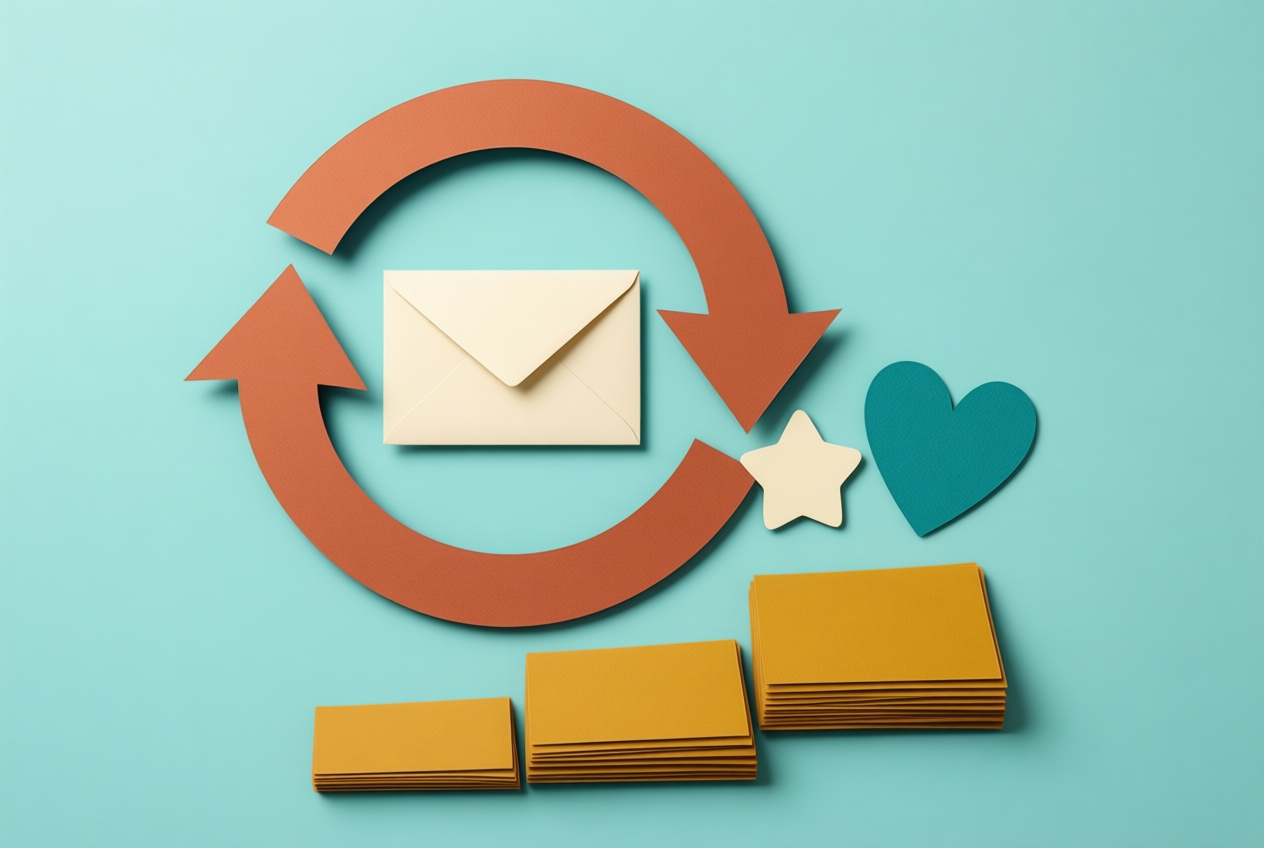
Not entirely, but the straight-line version is showing its age. Some marketers propose a flywheel instead. A funnel is linear, pushing people one way toward a sale. A flywheel is cyclical, with each happy client feeding new attention.
It’s the difference between a line and a loop.
Customer paths are often non-linear. Someone might spot you in a feed, read reviews a week later, then enquire without following the stages in order.
That’s the heart of the Gen Z question: journeys jump around instead of marching down a ladder, so the straight line stops matching how people buy. Brands now try to weave into daily life rather than waiting at the top.
Think of a freelance illustrator whose client found her through a repost, then checked her portfolio twice before enquiring.
A cyclical view asks what keeps that portfolio working on every visit, so a client who returns a month later still finds the enquiry form.
The shape has changed. The logic hasn’t.
Building a Funnel That Fits Your Business
A funnel doesn’t need a sales team or a big budget to work.
Steps for building your own funnel
Follow these in order:
- Define goals and audience. Decide who you want to hire you.
- Break the journey into stages. Map how a stranger becomes a client.
- Create content and capture leads. Build a portfolio and a simple enquiry form.
- Nurture, convert, and optimize. Follow up, make saying yes easy, and fix what stalls.
- Use available data. Check where enquiries come from and do more of what works.
Think of a freelance illustrator: a portfolio leads to an enquiry form, and a follow-up email after the project asks about the next title. Same funnel, repeat client.
How B2B and B2C funnels differ
Business-to-business (B2B) and business-to-consumer (B2C) funnels differ mainly in who buys.
According to a B2B lead generation study, B2B often needs education-heavy content and sales-rep involvement, while B2C purchases tend to be quicker and more emotional.
- Longer sales cycles. B2B deals take longer to close, so the funnel has more stages.
- Team decisions. Sales reps need to influence various roles in the decision-making unit (DMU), the group that approves a purchase together.
- Quicker, emotional B2C decisions. Consumer purchases often move faster and run on emotion.
- Education-heavy B2B content. Buyers need the problem explained before a team can agree, so guides do the heavy lifting.
Adjusting your funnel to fit your situation
Four things shift your funnel:
- Average order value (AOV). The bigger the project, the longer the decision.
- Funnel hacking. Study a competitor’s funnel, then borrow the structure, not the wording.
- Budget and brand awareness. A small budget means picking one or two channels, and brand awareness takes time to build.
- SaaS onboarding. Software as a service (SaaS) companies guide new users through first steps. Your studio’s version: a clear kickoff email.
How to Measure and Improve Your Funnel
A funnel you never measure is just a hunch. Here’s what to track, and where artificial intelligence (AI) can help.
The key numbers to track
Start with conversion rate (conversions ÷ visitors × 100) and cost per acquisition (CPA), which is spend ÷ new clients.
Customer lifetime value (CLV) is the total a client is worth to you over time.
Return on ad spend (ROAS) is ad revenue ÷ ad spend. Return on investment (ROI) is (gains minus costs) ÷ costs × 100.
Track:
- entry sources (where visitors arrive)
- exits (where they leave)
- close rates (clients won ÷ enquiries)
If most enquiries come from one platform, a photographer knows where to focus.
What to track at each funnel stage
Measure each stage on its own terms. It’s less about how many people saw your work and more about what they did next.
- Top of funnel (TOFU): traffic, impressions, and click-through rate (CTR).
- Middle of funnel (MOFU): time on page and bounce rate (visitors who leave after one page).
- Bottom of funnel (BOFU): conversions and sales.
Set one goal conversion per stage, meaning the action you want there. Without one, you’re guessing.
Testing changes and finding drop-off points
Run A/B split testing by showing two versions of one element to matching halves of your visitors.
Find drop-off points (pages where people leave on the way to an enquiry) and fix the biggest first. Iterate with data, making one change at a time.
With low traffic volumes, split tests can take months to reach a clear answer, so test bigger changes and watch trends.
Use post-purchase attribution surveys to ask new clients how they found you.
Avoid last-click bias, which credits only the final step before the sale. Look at the whole path.
Common funnel mistakes and how AI helps
- Ignoring MOFU: The middle is where prospects weigh you against others, so track how long they spend on your case studies.
- Poor lead qualification: An illustrator fielding endless requests for free sketches adds a budget question to the form and saves hours of back-and-forth.
- Neglecting retargeting: Ads aimed at past visitors keep your work top of mind.
- AI targeting and testing: Let AI tools suggest audiences and variations, but you set the goal and check the results.
- Data privacy and anti-spam: Collect only what you need, get consent before emailing anyone, and include an unsubscribe link.
A marketing funnel isn’t a machine that runs itself. It’s a set of steps you already take: showing your work, answering enquiries, and doing the job well enough that clients come back.
Naming those steps makes it easier to see where people drop off and fix one piece at a time.
Start small. A clear portfolio, a simple enquiry form, and a short check-in with past clients will do more for you than a complicated system you never maintain. Build the path, watch where people fall away, and keep the good ones coming back.
References
- Developing the marketing lead generation process of online and offline events in B2B business — theseus.fi (2023)
- How to Keep Them Coming Back: Lessons for SMEs Focused on Growth and Sustainability — doi.org (2026)
- Chapter 10 — openbooks.uct.ac.za
- Ainda AIDA? - Uma revisão histórico-crítica da hierarquia dos efeitos publicitários — doi.org (2017)
Questions
What is funnel in terms of sales?
A sales funnel is the sequence of steps a potential customer takes from first contact with a business to making a purchase. It focuses on the sales process, such as responding to an enquiry, discussing a quote, and signing a contract.
What is a customer journey funnel and how does it work?
A customer journey funnel maps how people move from discovering a business to buying, and often to returning or referring others. It usually has awareness, consideration, and conversion stages, with relevant information or follow-up at each step; because people may revisit or skip steps, the path is not always linear.
How did Gen Z break the marketing funnel?
Gen Z did not eliminate the funnel, but its buying journeys helped expose the limits of a straight-line model. People may discover a brand through a social post, check its work or reviews later, and return before making contact, so marketing increasingly needs to meet them across everyday channels and repeated visits.
Is funnel marketing outdated?
Funnel marketing is not entirely outdated, but the idea of customers moving neatly through fixed stages is less realistic than it once seemed. Funnels remain useful for mapping decisions and spotting where people drop off, while a cyclical flywheel better captures how satisfied customers can bring in new attention.
Sources
- Ainda AIDA? - Uma revisão histórico-crítica da hierarquia dos efeitos publicitários, doi.org,
- Chapter 10, openbooks.uct.ac.za
- How to Keep Them Coming Back: Lessons for SMEs Focused on Growth and Sustainability, doi.org,
- Developing the marketing lead generation process of online and offline events in B2B business, theseus.fi,