How to Write a Case Study That Shows How You Think
How to write a case study: turn one project into a clear story, choose its audience and length, and follow the steps from interview to publish.


Contents
A case study is an honest account of one project that shows a prospective client the problem, how you worked, and what changed. Build it around the client’s experience, using their own words, relevant visuals, and results you can verify; keep the story focused, get permission, and end with one clear next step. The goal is to make your work easy to understand and trust, not to make the case study long or flashy.
Think about the last time a friend asked what you actually did on a project you’re proud of. You probably didn’t list every file you opened. You told the story: the problem, what you changed, and the result.
That’s the heart of a case study: a short, honest account of one project that shows a future client how you think.
You don’t need a marketing background to write one. Once you know the parts, it’s just telling that story in order. Here’s what we’ll cover: structure, format, key components, the steps from interview to publish, and how long yours should be.
How to Write a Case Study, PET-style
This PET approach (short for problem, experience, and transformation) follows the client’s story from first snag to change. Here’s how to build each core piece.
Start with where the client got stuck
Open with the problem: where the client got stuck and why they reached out. Think of an illustrator whose publisher needed a cover before a fall deadline but couldn’t agree on a style.
Add obstacles, like a tight timeline or four people who had to sign off. Readers recognize that bind instantly.
What working with you looked like
Walk through your role: what you did, in what order, and why. Show your process, not just finals. Sketches and feedback show how you got there, not just what you delivered.
The illustrator might share thumbnail sketches and the note that moved the publisher off their first pick, so the next publisher sees how that call was made. If the client took your course or joined your membership, name it.
The same approach works for products like templates or digital kits.
Show the change in feelings and figures
Tie the story back to the change. Internal emotional wins are things like a founder who finally stopped dreading launch meetings. External tangible results are the measurable ones: sales, sign-ups, bookings.
Pair the numbers with before-and-after photos wherever you can. Internal-only results still count, like a team that now signs off in one round instead of several. Pick the metrics your client cares about, and report only what you can back up.
A modest figure you can defend beats a dramatic one you can’t. Trust is the whole point.

Can ChatGPT Write a Case Study?
Can ChatGPT create a case study? It can help you draft one, but it can’t know what changed for your client, and that story has to come from them.
Interview the client and gather material
Start with a client interview, which can be a podcast-style chat, a live call, or a recorded video. Use whichever format your client is most relaxed in.
For example, a freelance illustrator who redesigned a bakery’s packaging books one 30-minute call with the owner and leaves with the story, quotes, and numbers. Before you hang up, capture three things:
- Problem: what wasn’t working before they hired you.
- Experience: what working together was like.
- Results: what changed, in their words.
Build the story around their own words
Quote your client directly, since their words sound more believable than your summary. Shape the material into a PET story arc, short for problem, experience, and transformation.
Testimonials add social proof, the evidence that others already trust your work. Place a short line from each one beside the part of the story it supports.
Find search keywords in testimonial quotes
Your clients already use the words people search for. Highlight the phrases in their testimonials that name the problem or the outcome, such as brand refresh or product photos for a small shop, and work them into your headline and subheadings.
That’s your search engine optimization (SEO) strategy: helping search engines match your page with the right searcher.
A strong case study is both story-based and data-driven. The narrative keeps readers going, and any figures your client shares prove the result.
Draft around one big point, one ask
Before you write, map the story arc in one document, with a quote or number under each PET stage. Then state your big point in one sentence: the result readers should remember.
Here’s the format we’d suggest, section by section:
- Headline: the outcome, not just the service.
- Overview: the client, challenge, and result.
- Problem: what wasn’t working before.
- Experience: how you worked together.
- Results: what changed, with the client’s quote.
- Call to action: one clear next step.
Give readers one ask, not three options. Link key terms to related pages where they fit, so links sit in the body.
Rest the draft, then edit and publish
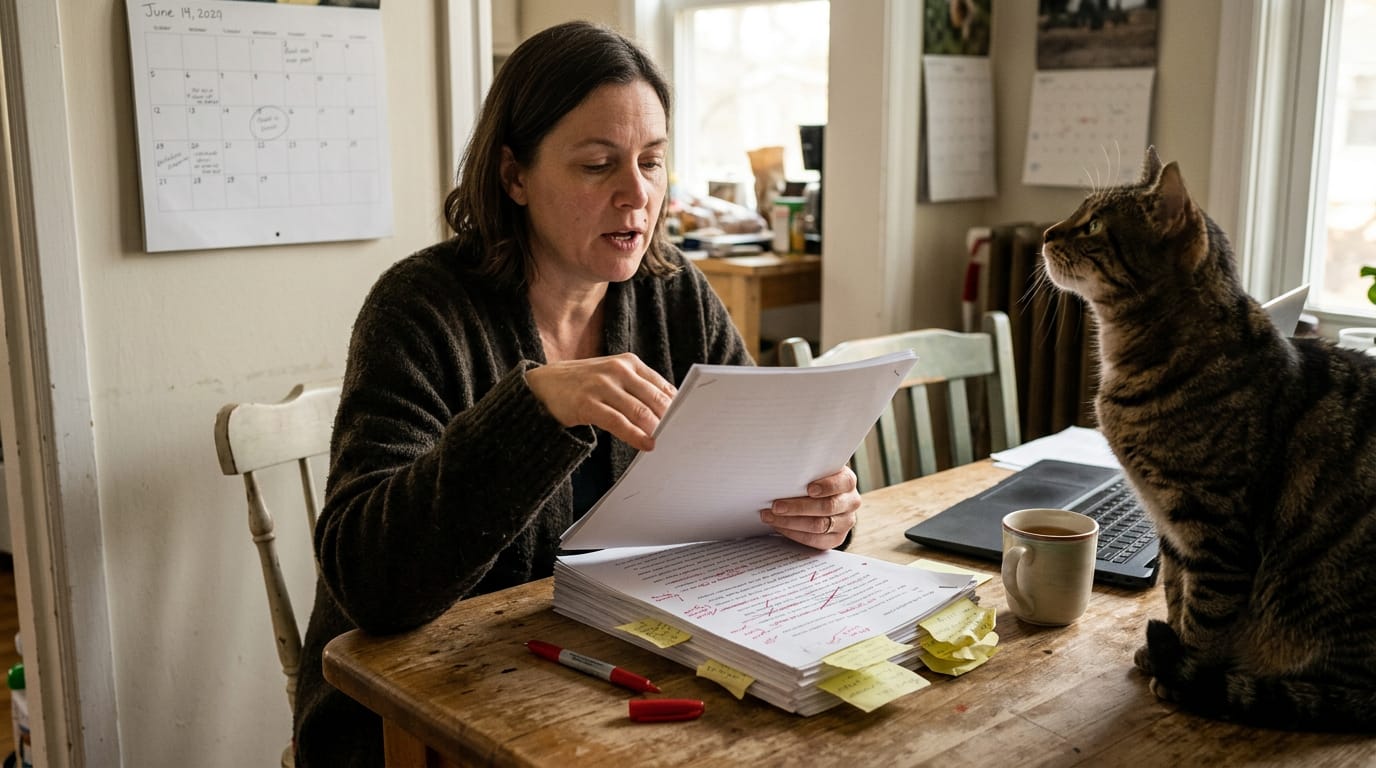
Rest the draft for two to three days. Fresh eyes catch the clunky sentences you’ve already read forty times.
Edit the copy, cutting whatever doesn’t move the story. ChatGPT can tighten rough sentences, but it can also invent details, so check every claim against your interview notes. If the budget allows, hand grammar to an outside copy editor.
Then read it aloud to check flow and transitions.
Send the draft to your client for approval, and get written permission to use their name, logo, and quotes. Then hit publish.
Deciding How Long and Who It’s For
Before you write a word, settle two questions: how much room the story needs, and whose name goes on it.
How long a case study should be
A case study can run short or long, so set your target before you start:
- Minimum: around 500 words, enough to tell one project’s story.
- Upper end: 2000+ words. Go that far only if the project has the depth to fill it.
- Where it lives: publish it on your blog, where you control the length and layout.
Aim for complete rather than long. Padding never helps.
Writing for yourself or for a client
Your own portfolio and a client’s project start the same way: an interview-based process. Talk through the work with the person who lived it, then shape those answers into the story.
For example, a freelance illustrator who finishes a picture book might interview the art director about the brief and the revisions, then build the case study around that conversation.
Client work needs a little more. Send the client a short note on the big points before you draft the full piece, so nothing surprises them at review time.
Publishing your own version lets you choose the angle and photos. Sending it to a client may mean getting their okay first.
Portfolio pages work best with photos placed beside the text they support, so a prospect can scan process and results at a glance.
Sometimes a non-disclosure agreement (NDA), the contract that limits what you can share, shapes what you show. The question isn’t whether you can tell the story, but which parts you’re allowed to tell. Read it before you publish.
Staying Motivated When Writing Feels Hard
Staying motivated on a case study is less about willpower and more about making the first step small. Here’s how to get words on the page even when the project feels like a chore.
Start rough and write in short sessions
If the case study keeps sliding down your to-do list, try these moves:
- Case studies needn’t be complicated. At heart, it’s a story about one project: what the client needed, what you did, and what changed.
- Write a rough first draft. Consider an illustrator who keeps putting off a case study for a finished picture book series. Instead of waiting for polished prose, they jot down the brief, the sketch rounds, and the final spreads in one messy sitting. Later, polishing takes an afternoon, and the case study is ready for the next pitch. Blank pages don’t win clients.
- Avoid the blank page. Open with what you already know: the client’s problem, the brief, a before-and-after image. The tougher parts, like results, can wait until you’re warmed up.
- Time-boxed one-hour sessions. Set a timer for one hour, write until it rings, and stop even if you’re mid-sentence. Your aim is progress rather than completion, and a focused hour beats an open-ended afternoon you never quite get around to.
- Focus music for productivity. If silence makes you restless, try instrumental music while you write. Test a few playlists and keep whatever keeps you on the page.

Resources for Going Further
If you want more help with case studies than this guide can give, the options below range from free to paid, so you can match the support to your time and budget.
Free and paid ways to get help
Here’s what’s available:
- Free case study roadmap. A no-cost starting point that lays out the steps in order, so you always know what comes next.
- Done-for-you copywriting. Hand the writing to a professional when you’d rather spend your hours on design or photography.
- Case study training program. A structured way to learn how to build case studies from start to finish.
- Blogging with SEO email course. An email course on blogging and search engine optimization (SEO), which is the practice of making your posts easier to find in search results.
Think of a freelance illustrator who has finished a handful of strong projects but never written up a single one. A roadmap gives them the order to work in, while a done-for-you writer can turn their notes into a finished page.
Either way, the payoff is a case study ready to send to the next prospect, not one that sits in a drafts folder for another year.
Free resources usually cost you time, while paid help costs you money. Pick the one that matches where you’re stuck, then start.
A strong case study doesn’t need to be long or fancy. It needs to be clear about the problem, honest about your process, and specific about the results.
Keep the structure simple, cut anything that doesn’t move the story forward, and let your visuals carry some of the weight.
Then keep it current. Each finished project is a chance to add another story to your portfolio, and each one gets easier to write once you’ve done it a few times.
Your work is already good. A clear case study just makes sure the right client sees it.
Questions
What are the 5 components of a case study?
The five core components are the problem, the experience of working together, the transformation or results, the client’s perspective, and a clear next step. Together, they explain what was wrong, what you did, what changed, and what readers can do next.
How can we write a case study?
Start by interviewing the client and gathering details about the problem, your process, and the results. Organize the story around those points, include the client’s own words and verifiable evidence, then edit, check every claim, and get permission before publishing.
How to write case format?
A practical case study format is: headline, overview, problem, experience, results, and call to action. Keep each section focused on the project’s story, and use a client quote or supported metric to make the outcome clear.
Can ChatGPT create a case study?
Yes. ChatGPT can help organize notes, draft sections, and tighten sentences, but it cannot know what actually happened or what changed for the client. Provide accurate interview notes and verify every detail, since AI can invent claims.