How to Start Freelancing Online, Step by Step
How to start freelancing online: choose a beginner-friendly niche, build a portfolio clients trust, and win your first jobs with a clear process.

Contents
Freelancing online means selling your skills to clients project by project and managing the work as your own small business. To get started, choose a service that matches your strengths and client demand, build a focused portfolio, and find jobs through marketplaces, direct outreach, or referrals; use clear proposals, pricing, contracts, and invoices. Start with manageable projects, deliver reliably, and turn each finished job into proof that helps you win repeat clients.
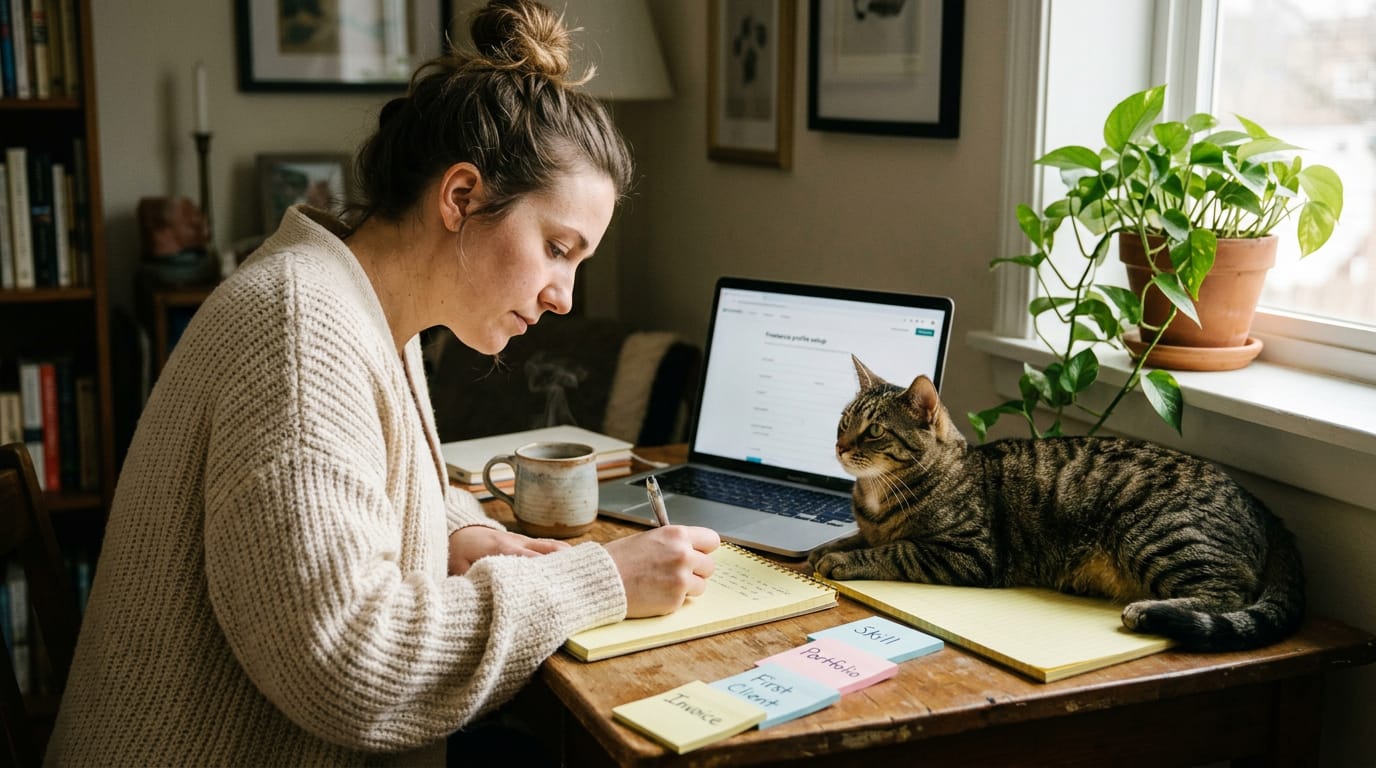
Picture a spare room, a laptop, and a skill you’re good at but no idea how to get paid for it. That’s where most people start freelancing online. The good news is that it’s a process you can learn, not a lucky break.
Freelancing means selling your skills to clients project by project, as your own small business.
In this post, we’ll walk through the steps in order: finding your niche, landing your first jobs, building a portfolio clients trust, and winning those first few clients.
We’ll also cover the admin side most guides skip, like pricing, proposals, and contracts.
How to Start Freelancing Online Despite Competition
Freelancing is easier to start than ever, which is both the opportunity and the challenge.
Why freelancing is growing and getting crowded
An Upwork study found 64 million Americans freelanced in 2023, an all-time high. A 16-country study in Small Business Economics calls freelance self-employment “increasingly prevalent.”
Low barriers to entry mean you can start with little more than a portfolio. Many people are also stepping back from the nine-to-five, so newcomers face fierce competition for the same jobs.
It’s less about whether you can get in and more about how you stand out.
Is AI replacing freelancers? Not entirely: AI can speed up admin, but clients still pay for judgment and trust.
Questions new freelancers ask most
How do you get started? Pick one service you can deliver well, and build a few samples that show it.
What should you freelance in? Start where your skills and paying clients overlap. That overlap is your niche.
How do you find your first client? Consider an illustrator who pitches five local bookstores with a cover mockup. If one says yes, that paid cover becomes her next sample.
How do you manage everything? Set up one contract template, one invoice, and one calendar before your first project.
Can you turn it into a career? Yes, with steady pricing and repeat clients.
Why clients can hire you from anywhere
Your portfolio matters more than your postcode, since clients can hire you across borders. Think of a small-town writer whose samples earn her first international client, a publisher overseas.
Video calls and shared files cover the rest, and the contract sets currency and payment dates up front. Distance was the easy part.
Spotting Your Skills and Picking a Niche
Before you pitch anyone, you need to know what you can offer and who you’ll offer it to.
Take stock of what you do well
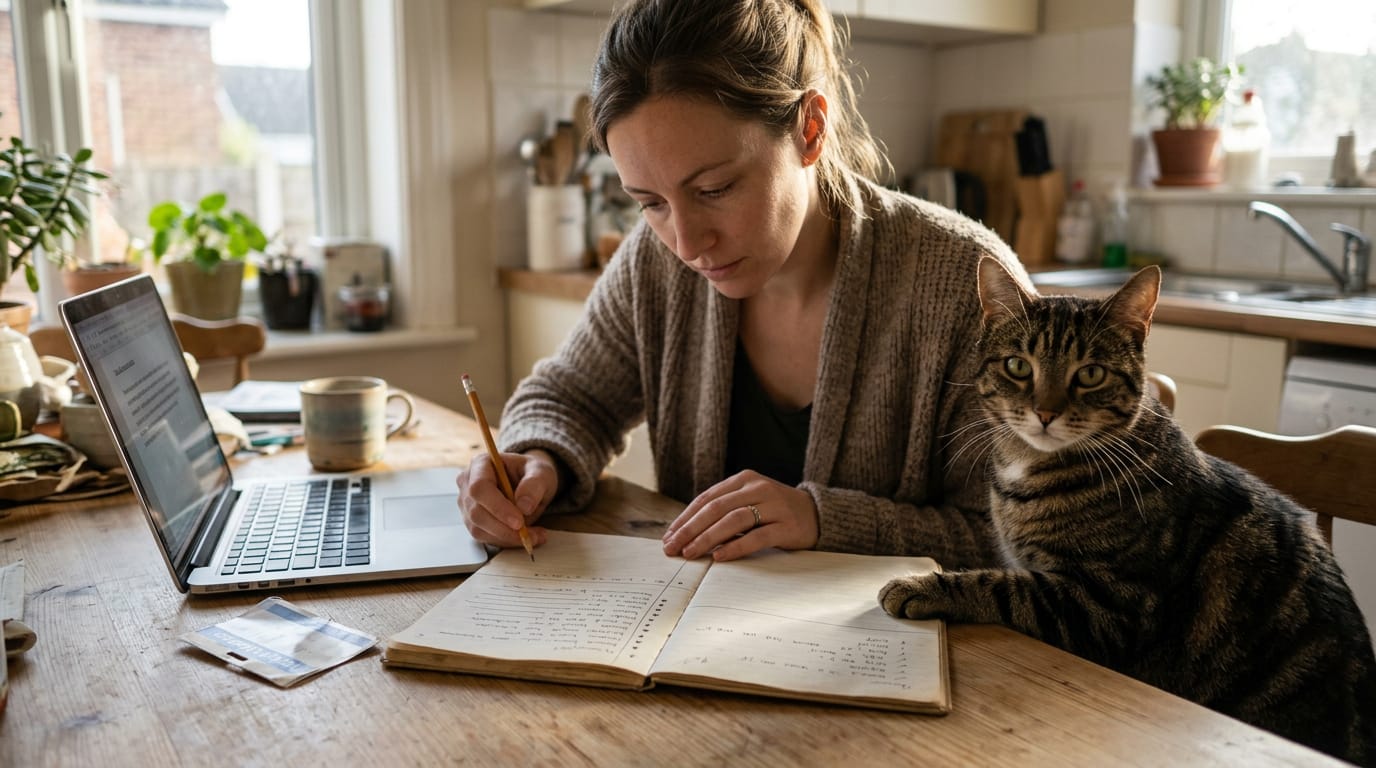
Start with what you already do. A transferable skill works across paid jobs, like meeting deadlines or catching errors others miss. A former retail worker who wrote product descriptions already has copywriting to sell.
Writing, coding, and editing all count, so sort what you do well from what you only do well enough.
Can you learn freelancing online? Yes, and most of it starts with skills you already have.
Pick a niche that fits and pays
A niche is a specific kind of work for a specific client, like brand identity for independent coffee shops. Test it before you commit:
- Match it to your skills. Aim where your strengths meet a real client need.
- Check earning potential. See what similar freelancers charge for that work.
- Follow industry trends and demand. Growing demand is easier to sell into.
- Take online courses. A short course can fill one gap before you pitch.
What makes a job worth taking
Not every job is worth taking, especially early on. Favor work related to your niche so each project feeds the next pitch.
Look for clients who hire beginners, and gauge the learning curve: a stretch helps you grow, but a project far over your head drains you.
An illustrator who wants children’s book work might take spot illustrations for a small educational publisher first. That gives her published samples and a reference for the next pitch.
Finally, choose work you want to do over work you think you should do. Enjoyment isn’t a luxury.
Freelance Jobs That Welcome Beginners
Not every freelance job asks for a long portfolio. Some of the best starter work rewards showing up on time and communicating clearly.
Jobs you can land with little experience
Many of these roles reward reliability more than credentials. Here’s what each one involves:
- Copywriter. Writes product descriptions, newsletters, or website text in clear, friendly language.
- Transcriptionist. Turns audio and video recordings into accurate text, which takes careful listening.
- Social media manager. Schedules posts, replies to comments, and keeps a small business’s accounts active.
- Virtual assistant. Handles inbox sorting, scheduling, and data entry so a client can focus on their work.
- Customer service. Answers questions by email or chat and helps customers work through common problems.
- Web research. Finds and organizes online information, such as contact lists or competitor details.
Think of a freelance illustrator who spends a few hours a week running a local bakery’s Instagram. The bakery gets steady posts, and the illustrator earns steady pay between drawing sessions.
More starter roles to consider
These roles tap into knowledge you may already have.
- Online consultant. Advises clients on a subject you already know well, from a trade to a hobby you’ve practiced for years.
- Blogger. Writes regular posts for a website or publication, building a body of work you can show future clients.
- Appointment setting. Books calls and meetings for another company’s team through phone or email outreach.
Pick the one that matches what you already do well, and you’ll have a clear first step.
Building Trust and a Portfolio Clients See
Clients check you out before they reply, so your site and samples need to answer their questions first.
Show your work on a simple site
You don’t need custom code. Tools like WordPress or Wix handle templates so you can focus on the work. Keep it to:
- Portfolio: your best work, grouped by type.
- Contact: a form or email link on every page.
- E-business card: a digital business card with a link to your site and contact details.
- Privacy policy: if your contact form collects names or emails, post one that says what you collect.
Photographers, lead with a tight set of your best images. Clients buy proof more than promises.

Chase experience and five-star reviews first
Early on, experience counts for more than income. Take projects that teach you the work and give you something to show, even at a modest rate.
Say you’re an illustrator with three sample covers from a friend’s self-published novel. You ask for a written review at delivery, then post both on your site. Your next prospect sees proof, not a blank page.
Aim for five-star reviews by delivering on time, then asking for feedback while the client is still happy. A small first job teaches more than a big one you’re not ready to finish. Start small.
Follow a learning roadmap from top freelancers in your field to see which skills clients pay for.
Free tools to use before paying
Check what’s free first. Free editing software covers most early work, from photo touch-ups to simple layouts.
- Use a tool’s free version until your workload truly needs more. Upgrade when a paid feature saves you hours each week, not when a sales page makes it look essential.
Landing Your First Few Clients
Your first clients will likely come from marketplaces, direct outreach, and people you already know.
Getting work through freelance marketplaces
A marketplace is a site like Upwork, Fiverr, or Freelancer where clients find freelancers for set jobs. Toptal, Guru, and Truelancer work too, each with its own rules.
Check the platform fees and application limits first. Fees come out of your earnings, and application limits cap how many jobs you can pitch.
Marketplaces usually hold payment and release it to you, minus the fee, once the work is approved.
Set up each gig around one clear service and a fixed rate. A logo designer, for example, lists a three-concept package at one price. Build that rate from three things:
- Your studio’s running costs
- The hours you’ll actually bill
- What similar profiles charge
Writing proposals that get replies
A proposal is a short pitch for one job. Send fewer proposals, but make each one specific.
Open with the result the client wants: ‘Your launch needs a logo that works in print and on screen, so here’s a three-concept package.’ Generic openings get ignored.
Test two openings with similar clients and keep whichever gets replies. Save one proposal template and one contract template with scope, price, and payment terms. Tailor just the opening.
Reaching clients directly without a marketplace
Cold outreach means emailing or calling people who haven’t asked for your work. Lead-finding tools can help you find the right names.
Direct outreach needs decent expertise. Make your message about their problem, not your services. Consider a web designer who emails three bakery owners about one specific fix for their outdated homepage.
Naming the fix shows she’s already looked at their work.
Repeat marketplace clients can often move to direct work, but check the platform’s rules first. Direct clients usually pay you by invoice, so your contract’s payment terms matter more.

Building connections that bring in clients
Freelancers in your niche often pass along work they can’t take. Be useful to them, and they’ll recommend you. Peers can show you how they price and word proposals.
LinkedIn can turn an old contact into a paying client. A copywriter reconnects with a former colleague and lands a website rewrite through a referral, a recommendation from someone who knows her work.
Staying Active and Growing over Time
Staying visible and sharp keeps clients coming back between projects.
Stay active on platforms to win bids
Stay online for bids by checking notifications often and replying fast, since a quick, thoughtful response can decide who gets the job.
On freelance platforms, clients favor freelancers who are active online. According to Parlel’s guide to finding freelancers, recent posts or profile updates suggest you’re “active, current, and more likely to reply.”
It’s less about being listed and more about being reachable.
Time-tracking apps help you stay responsive from anywhere. Think of a photographer who logs editing hours on her phone between shoots and answers a bid while waiting for coffee, so her invoices stay accurate and her replies stay fast.
Those logs also make tax season easier. Keep a running record of:
- hours
- income
- expenses
and set aside a share of every payment.
How much tax will you pay on freelance work? It depends on where you live and on your profit after expenses, not just what clients pay you.
Do you need an LLC to do freelance work? A limited liability company (LLC) can separate business and personal finances, but whether you need one depends on your location. Ask a local accountant before you file anything.
Keep learning to earn repeat clients
Keep researching your field. Trends shift, and clients notice when your work looks current.
Watch top freelancers. See how the strongest people in your niche:
- word proposals
- show portfolios
- set expectations
You’re not copying them; you’re adapting what works to your studio.
Earn repeat clients through quality. Repeat work is steadier than chasing new leads. Consider a copywriter who delivers clean drafts on schedule with a clear invoice, and the next brief arrives without a sales pitch. Good work gets remembered.
Starting out doesn’t take a perfect plan. It takes a clear skill, a niche you can explain in one sentence, and the nerve to price like the business you’re running.
Keep your admin tight from day one. Clear proposals, signed contracts, and on-time invoices keep your pipeline moving and your cash flowing.
Your first client is the hardest one to land. Every project after that gets easier, because each finished job becomes proof for the next one.
References
- Should I stay or should I go: intentions to freelance across 16 countries | Small Business Economics — link.springer.com (2026)
- Find Freelancers on Parlel — parlel.com (2026)
- Upwork Study Finds 64 Million Americans Freelanced in 2023, — globenewswire.com
Questions
How can I make $2000 a week working from home?
Making $2,000 a week from home is possible, but it depends on your skills, rates, and ability to find steady clients. Choose a service people will pay for, build samples, and pursue work through marketplaces, direct outreach, and referrals. Track your income and expenses, and remember that freelance earnings can vary from week to week.
How much tax will I pay on freelance work?
Freelance taxes depend on where you live and your taxable profit after allowable business expenses, not simply your total client payments. In the United States, freelancers generally report business income and may owe income tax plus self-employment tax, with estimated payments during the year. Keep records of income and expenses and consult a local tax professional for advice specific to your situation.
How do freelancers get paid?
Freelancers are commonly paid through a marketplace, which may hold the payment and release it after the client approves the work, minus platform fees. For direct clients, freelancers typically send an invoice with the price, payment method, and due date set out in the contract. Payment may be by bank transfer, card, or another agreed method.
Can I learn freelancing online?
Yes. You can learn freelancing online through courses, tutorials, and advice from experienced freelancers, while practicing the skills you plan to sell. Start with a service you can deliver well, make sample work, and fill specific skill gaps before pitching clients.
Is AI replacing freelancers?
AI is not replacing all freelancers. It can speed up tasks such as research or administration, but clients still value human judgment, communication, and trust. Freelancers can use AI as a tool while focusing on work that requires their expertise.
Can I make $1000 a month freelance writing?
Yes, freelance writing can bring in $1,000 a month, but it depends on your rates, workload, and ability to find clients. Build writing samples, choose a type of writing and client niche, and pursue both marketplace jobs and direct opportunities. Income may vary, especially while you build repeat clients.
Do I need an LLC to do freelance work?
You generally do not need an LLC to begin freelance work, but requirements and advantages vary by location. An LLC may help separate business and personal finances, though it does not replace appropriate contracts, records, or tax obligations. Check local rules and consult an accountant before forming one.
Can a 14 year old do freelancing?
A 14-year-old may be able to do freelance work, but age rules depend on local labor laws and the platform or payment service being used. Many marketplaces require users to be 18, while some allow minors to participate through a parent or guardian’s account. Check the relevant rules and involve a parent or guardian before accepting work or handling payments.