Pay to the order of means who gets paid on a check
Pay to the order of names who can receive a check. Match the payee line to the account and avoid deposit delays with correct endorsement steps.

Contents
The “pay to the order of” line on a check names the person or business meant to receive the money, so it identifies who can deposit or cash it. Use the payee’s correct legal or registered name, avoid blank or “Cash” payees, and ask for a new check rather than altering a mistake; endorse the back only when ready to deposit or transfer it. Matching the check to the right account and following your bank’s deposit rules helps prevent delays, returns, and avoidable payment risks.
Picture a client’s check arriving with the payee line written in a way that doesn’t quite match your business name. Now your bank is holding the deposit while someone sorts it out.
That line is the pay to the order of line, the spot where the writer names who gets the money. Get it right, and the check deposits cleanly. Get it wrong, and it can stall or get returned to you.
Here, we’ll cover filling in the payee line, endorsing a check, avoiding mistakes, and a few quick answers to common questions.
What ‘pay to the Order Of’ Means
Five small words sit on the front of most checks, and they do real work. Here’s what they mean and where they appear.
Who the check is paid to
Look at the payee line and you’ll see who the money is for. That’s the payee: the person or business the check names. The phrase tells the bank to pay that party, and every check carries one.
Only the payee can deposit or cash it, or someone the payee endorses it to. The line answers who gets paid, not how much.
A freelance illustrator gets a check made out to the studio’s business name, so it goes straight into the studio account.
Why the wording carries legal weight
Those five words do real legal work, giving the check four jobs:
- Creates a negotiable instrument. The check becomes a written order to pay money that can pass to someone else.
- Gives a legal instruction. It tells the bank exactly who the funds are payable to.
- Makes it enforceable and traceable. If a payment goes wrong, there’s a written record of who was meant to get it.
- Protects payer and payee. The client can show where the money went, and you can show you’re the rightful recipient.
The order wording makes a check payable to a named person, not to whoever holds it. That’s the whole point.
Why does my mail say pay to the order of?
The phrase is printed on the check itself, so every check in the mail carries it. Why not just “Pay”? A bare “Pay” leaves it less clear whether the check can be passed along, and the order wording settles that.
A bearer check skips the named payee entirely, so whoever holds it can try to cash it. That’s why bearer checks are considered less secure.
The wording has stuck around because it works and it’s standard on printed checks. Before you deposit, confirm the name on the payee line matches what you invoiced under.
Where the line sits on a check
Here’s a sample of the line:
Pay to the order of: [Your Studio Name] $[amount]
It sits near the top of the check, just under the date, with the amount box to its right. Read the name first. The dollars come second.
Filling Out the Payee Line Correctly
The payee is who receives the money, and the payee line is where you write that name. Get it right and the check deposits cleanly. Get it wrong and you’re asking for a new one. Here’s how we avoid that.
Getting the payee’s name right
Write the legal name, not the friendly version. Keep these five habits in mind:
- Legible ink handwriting. Write clearly in dark ink.
- Full legal names. Use the name on your legal documents, middle name included.
- Check spelling. One wrong letter can make a check hard to match.
- Avoid nicknames and initials. “Liz” or “J. Ramirez” may not match the bank’s records.
- Match ID or bank account. Check the line against your photo identification and bank account before the client copies it.
A freelance illustrator who signs her work “Liz” but banks as “Elizabeth Ramirez” should give clients the bank version.
Checks made out to businesses or groups
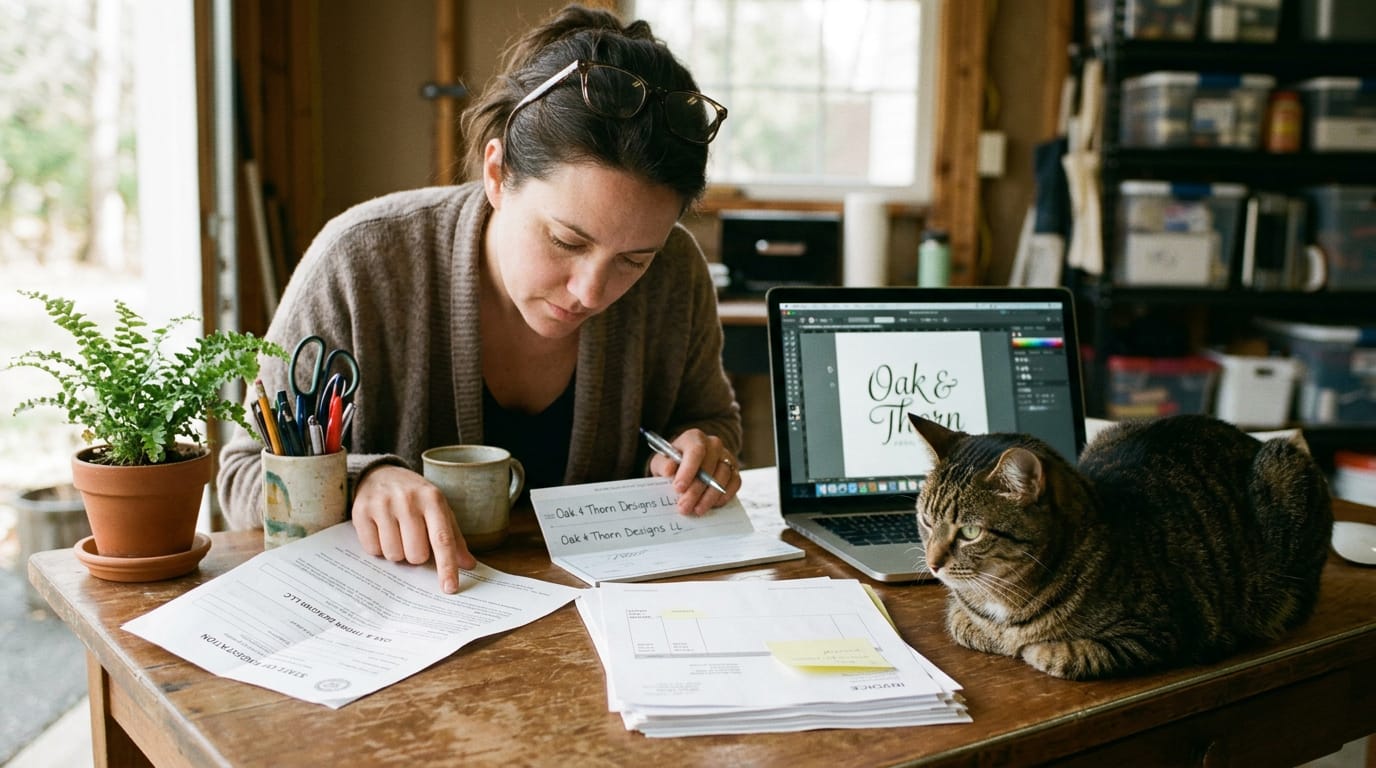
A business check should use the registered name, not the name on the logo.
- Official registered name. Use the name on the client’s registration paperwork, suffixes and all.
- Confirm DBA names. A DBA (“doing business as”) is a trade name used in place of the legal name. Confirm which one the client’s bank uses.
- “And” vs. “or.” “Smith and Jones” and “Smith or Jones” can mean different things to a bank, so copy the wording exactly.
- Long business names. If the name won’t fit, ask the client how they’d like it shortened.
- State payee name on invoices. Print the exact payee line on every invoice so the client can copy it.
- Depositing checks made to your studio name. If a check names your studio but your account is in your own name, ask your bank what it needs before depositing.
When the payee is cash or you
A few payee lines put your money at risk:
- Writing to “Cash.” Whoever holds the check can usually cash it, so don’t accept one.
- Writing a check to yourself. That works, but make sure your name matches the account you deposit it into.
- Memo line for account numbers. Use the memo line for an invoice or account reference so the payment matches the right job.
- Blank payee line risk. Whoever holds a check with an empty payee line can fill it in.
When a copywriter gets a check with a blank payee line, asking for a reissue is easy. Untangling one someone else has filled in is not.
How the money order payee line differs
The payee line on a money order is labeled and filled in a bit differently.
- Labeled “Pay to” or “Payee.” Look for either label and write the payee’s name there.
- Address and memo fields. Fill these in when they appear to help the payee match the money order to your invoice.
- Purchaser signs on front. The purchaser signs the front, not the payee.
- Black permanent ink. Use it so the entries stay readable.
Fixing a payee mistake the right way
- Void instead of overwriting. Don’t cross out or write over a wrong payee line. Start a new check.
- Write VOID across front. Mark the damaged check VOID in ink so no one can cash it.
- Keep voided check. File it with your records rather than tossing it.
- Money order reprint fee. Reprinting a money order may cost you. According to Experian’s guide on canceling money orders, most issuers charge a processing fee to cancel or replace one, so ask about the cost first.
What Happens from Writing to Cashing
A check passes through several hands before the money is really yours. Here’s the path, plus the spots where things go sideways.
Following a check from pen to bank
Every check follows these steps:
- Payer writes the payee name. Your name goes on the “Pay to the order of” line, making you the payee.
- Amount in numbers and words. Both should match, or the check may be delayed or returned.
- Payer signs the check. An unsigned check isn’t valid.
- Payee deposits or cashes it. Deposit promptly, since an old check can become stale-dated and get refused.
- Bank processes the payment. Your bank checks with the payer’s bank, and the money moves if the funds are there.
Clearing isn’t instant. Your bank may place a funds hold on a deposit, so you can see the money but can’t spend it yet. Ask your bank how long its holds last, since timing varies. If the payer’s account is short, you’ll get a bounced check back unpaid.
A check is a promise of payment, not payment itself. Don’t count it until it clears.
Signing a check over to someone else
To endorse a check, you sign its back, and that signature decides who collects next. Sign only when you’re ready to hand it over.
- Payee endorses on back. Sign in the endorsement area. Writing “For deposit only” above your signature limits the check to your account.
- New holder can deposit. Whoever holds the endorsed check can deposit it in their account.
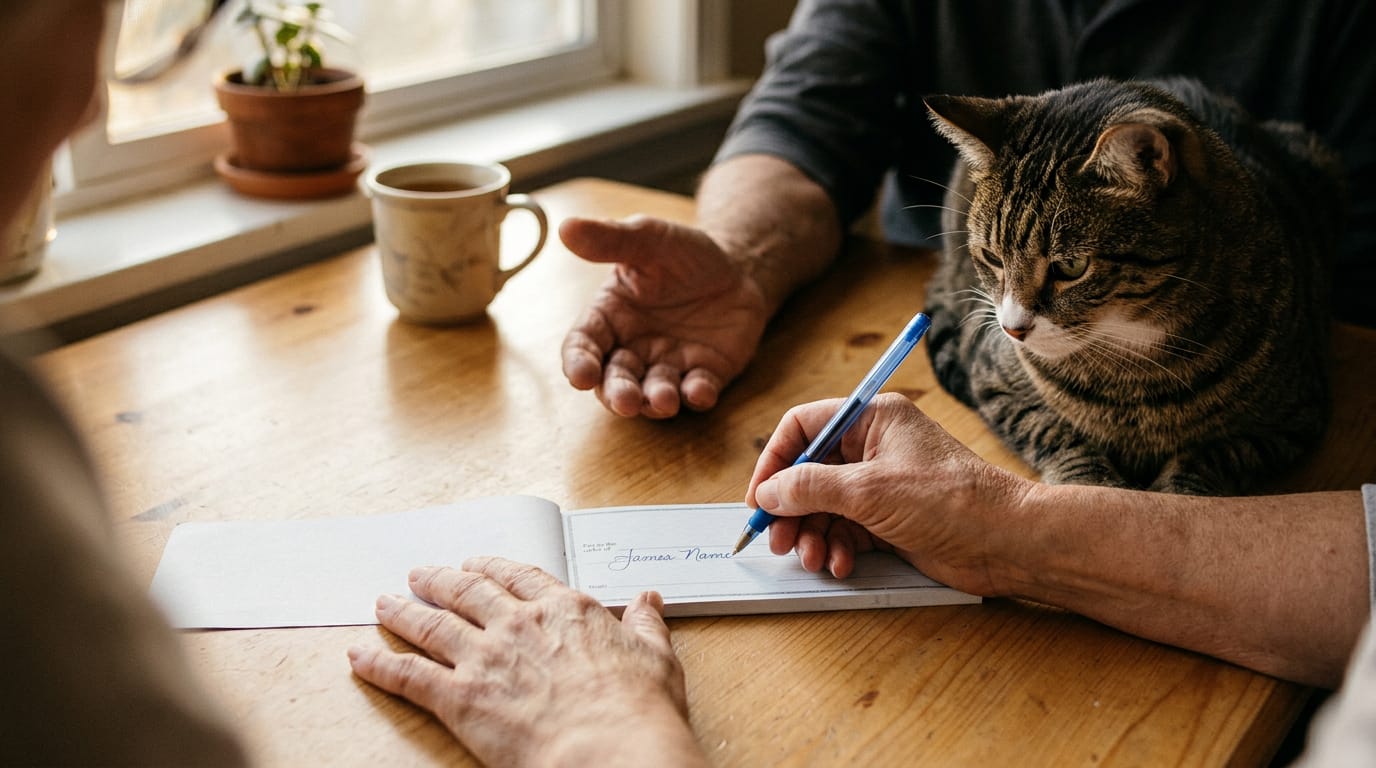
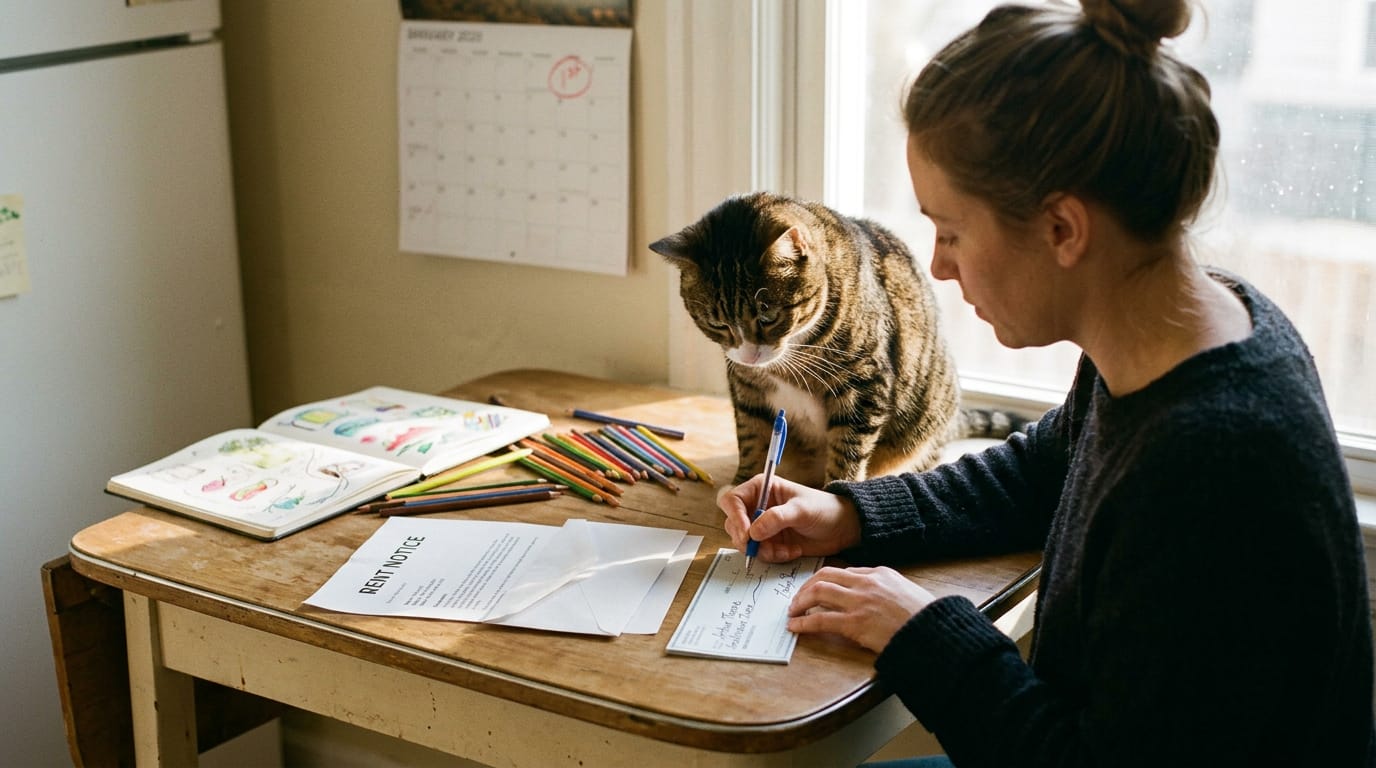
- Signing over to a landlord. Say an illustrator’s client check arrives the week rent is due. She writes “Pay to the order of” and her landlord’s name above her signature, and the landlord deposits it, covering rent without a trip to the bank. Ask first whether your landlord will accept it this way.
Ways to Endorse a Check
Your endorsement is the signature and any instructions on the back of a check, telling the bank who can take the money. Here are the five you’ll see most:
The main endorsement styles to know
- Blank endorsement. Just your signature, so anyone holding the check can cash it, not just deposit it. This is the riskiest choice.
- Restrictive “For deposit only.” Your signature, those words, and your business account number. Say a freelance illustrator’s check gets lost in the mail. A finder can’t cash it over the counter, so the money stays put.
- Special endorsement. “Pay to the order of” a named person, then your signature. Use it to pass funds to a print vendor, who then endorses it to deposit.
- Conditional endorsement. A promise tied to an event, like “Pay to the order of [name] upon delivery of final files.” Banks generally can’t verify the condition, so treat it as a written note, not a safeguard.
- Qualified “Without recourse.” Written beside your signature, it means you won’t be liable if the check bounces. Use it only when you won’t need to cover the money yourself.
Signing the back and depositing by phone
Sign the back of the check and write your name exactly as it appears on the payee line. Get it right the first time. Adding your account number under your signature is a common security step.
With a money order, the payee line should already show your name, so endorse it the same way.
Depositing by mobile deposit adds its own rules. Many banks ask you to write “For mobile deposit only” under your signature, and some want the bank’s name too. Your bank’s rules are the ones that count, so check the app before you snap the photo.
Avoiding Mistakes and Protecting Your Checks
A small slip can stall a deposit for days, so it pays to know the usual trouble spots and how to protect checks once they’re in the mail.
Errors people make most often
Most delays come from a few avoidable habits:
- Illegible handwriting. If the payee line (the one that starts ‘Pay to the order of’) is hard to read, it invites questions and slows the deposit.
- Incomplete or incorrect names. A photographer whose business account is under the studio’s full name, but whose check says only their first name, may have to wait for a corrected check.
- Pencil or erasable ink. Anything that smudges or wipes off is easy to change, so ask clients to write in pen.
- Trying to alter checks. Crossing out a name or amount looks like tampering. Ask for a fresh check instead.
Keeping checks safe from fraud and theft
A few habits keep your money out of the wrong hands:
- Endorsement adds security. Your signature on the back ties the check to you, so sign only when you’re ready to deposit.
- Bearer checks usable by anyone. A bearer check is payable to whoever holds it, so who holds it matters more than whose name is on it. Always ask clients to name you as the payee.
- Gel pens resist check washing. The American Bankers Association (ABA) recommends permanent gel ink, which bonds better to paper fibers and is less prone to check washing, where someone lifts the ink off a check to rewrite it. Permanent ink wins.
- Forged endorsements. A forged endorsement is when someone signs your name on the back to cash a check meant for you. Check your bank statements regularly so anything unfamiliar gets caught fast.
Other Ways to Pay Besides Checks
Checks aren’t your only option, and they’re not always the fastest. Here’s how the main alternatives work, from paper-based options to fully automated ones.
Using money orders or cashier’s checks
A money order suits smaller amounts, since it’s limited to under $1,000. For larger payments, ask for a cashier’s check, which the client’s bank issues.
Think of a photographer booking a multi-day shoot who needs a deposit secured before the crew is booked. Either option is a cleaner alternative to a personal check, which can take time to clear.
It’s about certainty rather than convenience, and that’s the trade you want when money is on the line.
Paying by app, transfer, or automation
Here are the main digital options:
- Mobile transfers and ATMs. Clients can send money from their banking app or at an automated teller machine (ATM), and both skip the mailbox entirely.
- Money transfer services. Dedicated services can move funds too, but check the fees and timing before you suggest one.
- Business-to-business (B2B) payment automation. Once a client’s accounts payable team (the people who pay bills) sets up a scheduled payment, the money arrives without you chasing it. Think of an illustrator on a monthly retainer whose client’s bookkeeper sets up a recurring transfer. The illustrator stops sending reminders, and cash flow gets more predictable.
- Bank transfer. Put it on every invoice, with your account details spelled out clearly. Offer it as the first choice, not the last resort.
Make the easy option the obvious one.

Pros and Cons of Order Checks
An order check is made out “to the order of” a named payee, so the payee can pass it along by endorsement, meaning a signature on the back. Here’s what we’d weigh first.
Benefits of using order checks
- Transferability. The payee can sign the check over to someone else, like a bookkeeper, without you rewriting it.
- Security. Security depends less on who holds the check than on who can endorse it. A stranger has a much harder time cashing one.
- Record keeping. The payee line shows who the money is for, which makes matching payments to invoices easier.
- Flexibility. A client can write checks to your business or personal name, and you can endorse one to a third party if needed.
- Clear payee identification. Take a freelance photographer whose client wrote checks to her personal name, though her studio banks under its business name. Asking for a fix before it goes out saves a trip to the bank.
Drawbacks to weigh before choosing
- Slow processing. It’s one more step, so the money may take a little longer to land.
- Loss or theft risk. An order check is harder for a thief to cash, but a lost check is still a lost check.
- Bank fees. Some banks charge for check-related services, and terms vary, so don’t assume a deposit is free until you’ve checked your account agreement.
- Manual handling. Someone has to sign the back and deposit it in person, by mail, or by scanning if your bank allows it. Every hand-off is a chance for something to slip.
- Endorsement complexity. A check with two payees may need both signatures, and one misspelled name can get it sent back. Spelling counts.
Quick Answers to Common Questions
Small mistakes on the payee line, the space that names who gets paid, can hold up a deposit. Here are the questions readers ask about it, with quick answers you can use today.
Questions readers ask about payee lines
- Can a client just write “Cash”? Avoid it. A check made out to cash can be handed over to anyone who holds it, which is the opposite of what you want for a business payment. Ask the client to name your business instead.
- What if the name is misspelled? Don’t deposit it and hope for the best. Ask the client for a corrected check, so the name on the check matches your records from the start.
- Can you fix the payee after it’s written? Don’t correct it yourself. Crossing out and rewriting a name looks messy and can raise questions at the bank, so ask the client to void the check and issue a new one.
- Why does it need the full legal name? Because the line should match the legal name on your business paperwork, not the nickname on your portfolio. For example, a photographer who works under a short studio name sends the client the longer registered version, so the check matches the business account on the first try.
- What if the name is too long? Write it as neatly and as small as you can to fit the full name. Shorten it only to a version you’ve confirmed matches your registration, and check with the client first. Exact beats fast.
Clear payee details and careful endorsements are what turn a check into cash in your account. When every line is filled in correctly, the money moves without a second round of emails, and that small win adds up across every client you serve.
Make checking the payee line and endorsement part of your routine, and you’ll spend less time chasing payments and more time on the work you love.
A clean check gets you paid. A messy one gets you chasing.
References
- Can You Cancel a Money Order? — experian.com (2025)
- Hidden Risk in Your Mailbox: What to Know About “Check Washing” — snbonline.com (2025)
Questions
What is pay to the order of on a check called?
It is called the payee line, and the person or business named there is the payee. The wording makes the check payable to that named recipient.
Why does my mail say "pay to the order of"?
It is standard wording printed on checks, including checks sent through the mail. It directs payment to the person or business named on the payee line.
What does it mean to pay to the order of?
It means the check is payable to the named person or business. Generally, that payee can cash or deposit it, or endorse it to someone else.
What do I put pay to the order of?
Write the full legal name of the person or business receiving the money. Use a name that matches their identification, business records, or bank account, and check the spelling.
Sources
- Can You Cancel a Money Order?, experian.com,
- Hidden Risk in Your Mailbox: What to Know About "Check Washing", snbonline.com,